
Key Takeaways
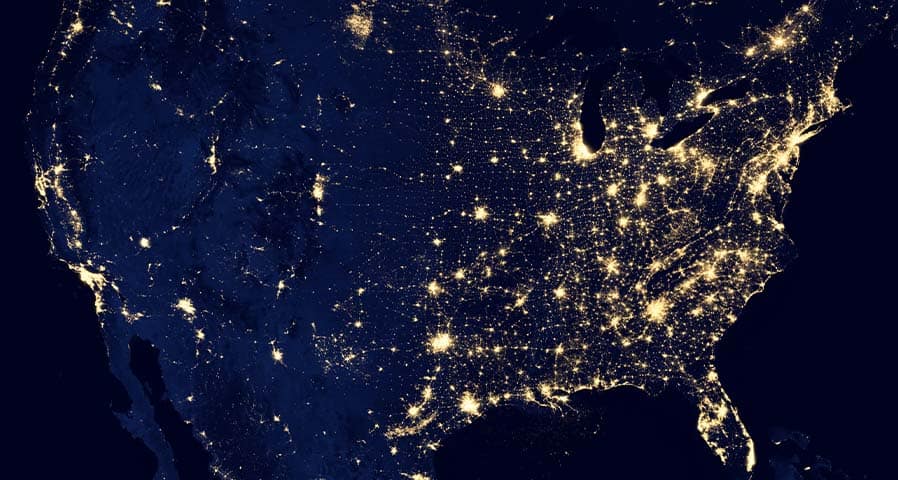
LED lighting rebates are available in approximately 47 states, covering nearly 75% of the U.S. commercial market, and average incentive values have increased by about 17% year over year. These rebates are driven by utility energy-efficiency goals and evolving regulations, making availability and value highly dependent on location.
Where can businesses find the strongest LED lighting rebates, and how do programs differ across states in 2026?
- Northeast states offer the highest rebate values and the strongest program funding.
- Midwest utilities offer consistent, scalable incentive programs.
- Southern states vary significantly based on utility participation.
- Western states prioritize energy savings and regulatory compliance.
- Lighting controls and DLC-qualified products are increasingly required.
Which States Offer the Best LED Lighting Rebates?
The strongest LED lighting rebates in 2026 are concentrated in states with aggressive energy-efficiency mandates and well-funded utility programs.
2026 LED Rebate Strength by State
| State | Key Programs / Utilities | Rebate Strength | Notes |
| Massachusetts | Mass Save | Very High | High incentives for LED + controls; strong program funding |
| New Jersey | NJ Clean Energy Program | Very High | Incentives for retrofit and new construction |
| Pennsylvania | PECO, PPL, FirstEnergy | High | Broad commercial eligibility across sectors |
| New York | NYSERDA, Con Edison | High (shifting) | Programs evolving toward whole-building efficiency |
| California | PG&E, SCE, SDG&E | High | Energy savings-based incentives tied to compliance |
| Illinois | ComEd, Ameren | High | Strong prescriptive and custom rebates |
| Michigan | DTE, Consumers Energy | High | Robust custom incentive opportunities |
| Texas | Oncor, CenterPoint, AEP | Moderate–High | High incentives but more complex applications |
| Florida | FPL | Moderate | Regional variability in incentive value |
| Georgia | Georgia Power | Moderate | Prescriptive-heavy rebate structure |
| North Carolina | Duke Energy | High | Strong commercial and industrial programs |
| Ohio | AEP Ohio, Duke | High | Includes incentives for lighting controls |
| Colorado | Xcel Energy | High | Strong indoor and outdoor rebate programs |
| Arizona | APS, SRP | Moderate–High | Incentives for LED and control systems |
| Washington | PSE, Avista | High | Strong regional energy-efficiency funding |
How Do LED Lighting Rebates Differ by Region?
LED lighting rebates vary by region due to differences in energy policy, utility funding, and regulatory priorities.
Northeast (Highest Incentive Density)
States in the Northeast consistently offer the highest rebate values due to aggressive decarbonization goals and long-standing energy-efficiency programs.
- Programs like Mass Save and NJ Clean Energy prioritize deep energy savings.
- Incentives often include both LED lighting and advanced controls.
- High adoption of DesignLights Consortium (DLC) qualified products is required.
- Ideal for large-scale commercial and portfolio-wide upgrades
Midwest (Stable and Predictable Programs)
Midwestern states provide some of the most reliable rebate programs due to strong utility participation.
- Utilities like ComEd and DTE maintain consistent funding cycles.
- Balanced mix of prescriptive and custom rebates
- Strong support for industrial and warehouse applications
- ENERGY STAR and DLC compliance are often required for eligibility
West (Policy-Driven Incentives)
Western states align rebate programs with strict energy codes and environmental policies.
- Title 24 energy standards influence California programs.
- Incentives prioritize measurable energy savings rather than fixture counts.
- Increased emphasis on integrated systems, including lighting controls
South (Utility-Driven Variability)
Southern rebate programs vary significantly by utility provider rather than being governed by statewide mandates.
- Some utilities offer strong incentives, while others offer limited ones.
- Custom rebates often provide the best value for large projects.
- Application complexity can be higher compared to other regions.
Turn Rebate Insights into Real Savings
Rebate availability can vary significantly by state, but knowing where incentives exist is only the first step. Review Our Process to see how Incentive Rebate360 helps businesses identify opportunities, manage utility requirements, and maximize LED lighting rebates across multiple locations.
When you’re ready, schedule a call with our rebate experts to review your facilities and develop a strategy to capture available incentives, no matter where your operations are located.
👉 Review Our Rebate Recovery Process
👉 Schedule a Call with Our Rebate Experts
Why Are Some State Programs Changing or Declining?
LED rebate programs are evolving because baseline lighting efficiency has significantly improved, reducing the need for simple one-for-one replacement incentives.
For example, in New York, NYSERDA is shifting focus away from basic LED retrofits toward comprehensive energy strategies that combine lighting, HVAC, and building controls. This transition reflects a broader industry trend where utilities prioritize deeper energy savings rather than standard upgrades.
At the same time, the widespread adoption of high-efficiency LED systems that meet the DesignLights Consortium (DLC) V5.1 and ENERGY STAR standards has raised the performance baseline. As a result, rebate programs are increasingly designed to reward advanced technologies and measurable energy reductions.
What Trends Are Driving LED Rebates in 2026?
Several national trends are shaping how rebate programs differ by state.
Key 2026 Trends
- Incentive values increased by approximately 17%
- Programs are shifting toward kWh-based energy savings models.
- LED-to-LED upgrade eligibility increased by 22%
- Lighting controls incentives increased by approximately 7%
- Fluorescent lamp bans are accelerating LED adoption.
States with Fluorescent Phaseouts
- California
- Colorado
- Minnesota
- Oregon
- Rhode Island
These policies are accelerating the transition to LED lighting while also reshaping how rebates are structured and distributed.
Why Do LED Rebates Matter for Multi-State Businesses?
Rebate differences between states can significantly impact project costs and return on investment, especially for businesses operating across multiple locations.
Organizations with a national footprint can benefit by prioritizing upgrades in high-incentive regions, aligning projects with utility rebate cycles, and incorporating lighting controls to maximize savings. A strategic approach allows businesses to capture significantly more funding compared to treating each project independently.
Key LED Lighting Facts Businesses Should Know
| Metric | Value |
| Energy Savings | Up to 75% vs legacy lighting |
| Typical Lifespan | 50,000+ hours |
| Rebate Coverage | ~75% of U.S. |
| Incentive Increase (2026) | ~17% average |
| LED-to-LED Rebate Growth | +22% programs |
Frequently Asked Questions
What is the difference between prescriptive and custom rebates?
Prescriptive rebates provide fixed incentives per fixture or watt reduced, while custom rebates are based on total energy savings and are typically used for larger or more complex projects.
Which states have the highest LED rebates?
Massachusetts, New Jersey, Pennsylvania, and California consistently offer the strongest rebate programs due to aggressive energy-efficiency policies and utility funding.
Are DLC and ENERGY STAR required for rebates?
Many programs require lighting products to meet DesignLights Consortium (DLC) or ENERGY STAR standards to qualify for incentives.
Do rebates vary within the same state?
Yes. Utilities administer most rebates, so incentive amounts and eligibility can vary by service territory.
Can multi-location businesses apply for rebates?
Yes. Businesses operating across multiple states can access different rebate programs and benefit from a coordinated strategy.
Maximize Your LED Rebates with Incentive Rebate360
LED lighting rebates vary widely by state, utility provider, and project scope, making it difficult for businesses to capture the full value of available incentives without expert guidance.
Incentive Rebate360 helps businesses identify, secure, and maximize rebates across single-site and national rollouts. From eligibility analysis to application management, the team manages the entire process, enabling your organization to stay focused on operations while reducing project costs and accelerating ROI. Call 480-653-8180, email [email protected], or schedule a consultation to evaluate your rebate opportunities and get started on your LED upgrade today.



0 Comments