
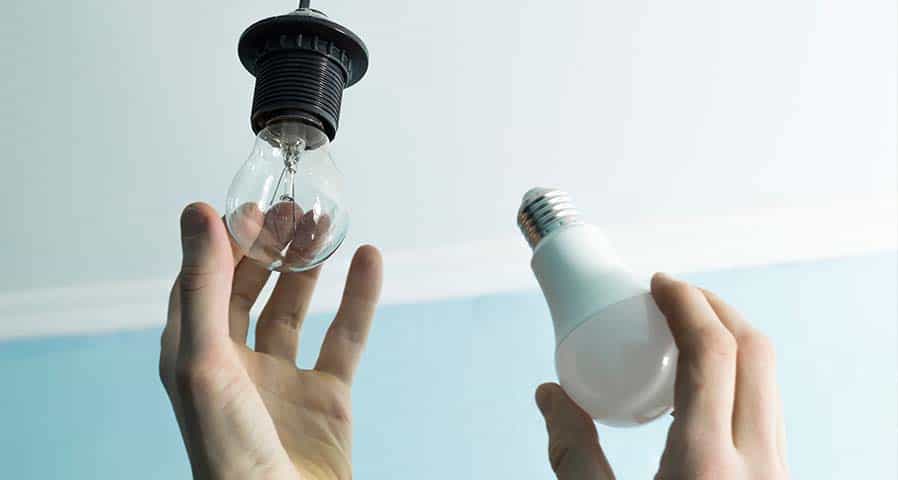
Commercial lighting projects are no longer limited to replacing fluorescent lamps with LEDs. Today, facility managers, energy managers, sustainability teams, and procurement professionals must evaluate multiple modernization strategies to improve efficiency, reduce operating costs, and maximize available incentives.
The three most common approaches, LED retrofits, LED upgrades, and LED-to-LED upgrades, are often used interchangeably, but they are not the same. Each approach delivers different levels of energy savings, lighting performance, installation complexity, and utility rebate opportunities.
The conversation around commercial lighting rebates has also changed significantly in 2026. While many building owners assume incentive programs are shrinking as LED adoption becomes widespread, utilities are actually expanding opportunities in several areas. According to the 2026 Commercial Lighting Rebate Outlook, average prescriptive lighting incentives increased by 17% across all categories, while rebate programs specifically supporting LED-to-LED upgrades grew by 22% heading into 2026. Utilities are increasingly rewarding projects that combine high-efficiency lighting with advanced controls to achieve deeper energy savings and support grid modernization goals.
Understanding the differences between an LED retrofit, an LED upgrade, and an LED-to-LED upgrade can help organizations select the right project strategy and maximize available commercial lighting rebates.
Key Takeaways
- An LED retrofit upgrades existing fixtures while retaining the original housing.
- An LED upgrade typically converts fluorescent, HID, or other traditional lighting systems to LED technology.
- An LED-to-LED upgrade replaces older LED fixtures with newer, higher-efficiency LED products.
- Utility rebate programs increasingly reward projects that incorporate advanced lighting controls.
- LED-to-LED rebates are one of the fastest-growing categories in commercial lighting incentives.
- State-level bans on fluorescent lighting are accelerating investment in both LED upgrades and LED-to-LED projects.
- Advanced controls, such as Networked Lighting Controls (NLC) and Luminaire-Level Lighting Controls (LLLC), can significantly increase incentive values.
What Is an LED Retrofit?
An LED retrofit involves upgrading the internal components of an existing fixture while keeping the original housing in place.
Rather than removing and replacing the entire luminaire, contractors install LED lamps, drivers, or retrofit kits within the existing fixture body. Common examples include fluorescent-to-LED tube conversions, LED strip retrofit kits, and LED downlight retrofit modules.
Benefits of LED Retrofits
- Lower upfront project costs
- Faster installation timelines
- Reduced facility disruption
- Minimal ceiling and infrastructure modifications
- Eligibility for many utility rebate programs
Limitations of an LED Retrofit
While retrofits provide a cost-effective path to energy savings, they retain many of the limitations of the original fixture. Older housings may contain aging wiring, degraded reflectors, or optics that were not designed specifically for LED performance. As a result, light distribution and long-term efficiency may not match those of a modern purpose-built LED fixture.
What Is an LED Upgrade?
An LED upgrade is a broad term used to describe the conversion of traditional lighting technologies to LED technology.
Common examples include:
- Fluorescent to LED
- Metal halide to LED
- High-pressure sodium to LED
- Incandescent to LED
- Compact fluorescent to LED
In many projects, an LED upgrade involves replacing the entire fixture with a dedicated LED luminaire designed specifically for modern lighting applications.
Benefits of an LED Upgrade
LED upgrades continue to be one of the most effective energy-efficiency improvements available to commercial and industrial facilities.
Benefits often include:
- 50% to 75% reductions in lighting energy consumption
- Reduced maintenance costs
- Longer fixture lifespans
- Improved light quality and visibility
- Enhanced reliability
- Easier integration with building automation systems
- Compatibility with advanced lighting controls
Because these projects typically generate substantial energy reductions, they remain a major focus of commercial lighting rebate programs nationwide.
What Is an LED-to-LED Upgrade?
An LED-to-LED upgrade replaces an existing LED fixture with a newer-generation LED fixture.
Many facilities installed their first LED systems between 2010 and 2018. While those systems represented a significant improvement over fluorescent and HID lighting, LED technology has advanced considerably over the past decade.
Modern LED fixtures deliver improvements in:
- Efficacy
- Color rendering
- Color maintenance
- Thermal management
- Optical distribution
- Dimming performance
- Smart controls integration
According to industry experts, modern LED products provide substantially better performance than many early-generation LED systems while offering greater energy savings and flexibility.
Why Replace Existing LEDs?
Many facility owners assume that because they have already converted to LED technology, there are few opportunities left for additional savings.
In reality, many early LED installations are approaching end-of-life and may experience:
- Lumen depreciation
- Color shift
- Driver failures
- Reduced light output
- Inconsistent performance
Early-generation LED products often produced 70 to 90 lumens per watt. Modern LED fixtures frequently deliver 160 to 200+ lumens per watt, creating opportunities for substantial additional savings. As a result, LED-to-LED upgrades can often reduce lighting energy consumption by an additional 20% to 50% compared to older LED systems.
Features Available in Modern LED Systems
Today’s LED fixtures commonly include:
- Field-selectable wattage
- Field-selectable color temperatures
- Integrated occupancy sensors
- Daylight harvesting
- Bluetooth controls
- LLLC systems
- NLC systems
- Building Management System (BMS) integration
These features allow organizations to achieve greater operational flexibility while unlocking additional utility incentives.
Expand Your Impact Through the Incentive Rebate360 Partner Network
Maximizing energy savings and project ROI often requires more than a single solution. That’s why Incentive Rebate360 has built a network of trusted partners that provide specialized services across energy efficiency, facility management, EV charging, lighting, sustainability, procurement, and infrastructure optimization.
The Incentive Rebate360 Partner Hub connects organizations with industry-leading companies that help businesses reduce operating costs, improve efficiency, implement energy-saving technologies, and navigate complex incentive opportunities. From turnkey facility services and LED lighting solutions to EV charging infrastructure, energy consulting, and sustainability planning, our partners help organizations achieve their operational and financial goals.
Explore our partner network to discover solutions that can help your organization maximize incentives, improve performance, and drive long-term value.
LED Retrofit vs LED Upgrade vs LED-to-LED Upgrade
| Category | LED Retrofit | LED Upgrade | LED-to-LED Upgrade |
| Existing Housing Remains | Yes | No | No |
| Replaces Legacy Lighting | Yes | Yes | No |
| Replaces Existing LEDs | No | Sometimes | Yes |
| Installation Cost | Lowest | Moderate to High | Moderate |
| Energy Savings | Moderate | High | Moderate to High |
| Lighting Quality Improvement | Moderate | High | High |
| Smart Controls Integration | Limited | Excellent | Excellent |
| Rebate Availability | Common | Very Common | Rapidly Growing |
How LED-to-LED Upgrades Are Changing Utility Rebate Programs
LED-to-LED upgrades increasingly qualify for utility rebates, and the opportunity continues to grow.
Historically, utility incentive programs focused almost exclusively on replacing fluorescent, HID, and incandescent lighting because those projects generated the largest energy reductions. As LED technology became the dominant lighting source in commercial and industrial facilities, utilities began seeking new opportunities to achieve measurable energy savings.
That shift has created a rapidly expanding market for LED-to-LED upgrades.
Industry research shows that 27 utility programs explicitly supporting LED-to-LED upgrades launched in 2025. Heading into 2026, the number of programs offering dedicated LED-to-LED incentives increased by an additional 22%, signaling a major shift in utility efficiency strategies. At the same time, average prescriptive lighting incentives increased by 17% across all rebate categories, demonstrating that utilities continue to view lighting as a valuable source of energy savings despite widespread LED adoption.
Many of today’s rebate programs evaluate LED-to-LED projects based on:
- Verified wattage reduction
- Fixture efficacy improvements
- Integration of advanced controls
- Demand-response capabilities
- NLC implementation
- LLLC deployment
As older LED systems installed between 2010 and 2018 approach end of life, utilities increasingly recognize that replacing first-generation LED products can yield meaningful energy savings while supporting broader grid modernization objectives.
For facility owners, replacing aging LED fixtures may qualify for incentives that did not exist a few years ago.
What Is Considered an LED Retrofit for Utility Rebate Programs?
Most utility programs classify an LED retrofit as a project that upgrades lighting components without replacing the entire fixture assembly.
Common qualifying retrofit projects include:
- Fluorescent tube to LED tube conversions
- LED retrofit kits
- Driver replacement projects
- LED downlight retrofits
Many utilities require products to appear on the DesignLights Consortium (DLC) Qualified Products List or meet ENERGY STAR performance requirements.
Are LED Retrofit Rebates Different From LED Upgrade Rebates?
Yes.
Utility companies generally calculate incentives based on projected energy savings, equipment life expectancy, and overall project performance.
Because complete fixture replacements often generate greater efficiency gains and longer useful life, incentive amounts may exceed those offered for retrofit projects.
Additionally, projects that incorporate advanced lighting controls frequently qualify for enhanced incentive levels. Research cited by the DesignLights Consortium shows that advanced lighting controls can significantly increase overall energy savings compared to fixture-only upgrades.
How Lighting Controls Impact Commercial Lighting Rebates
Lighting controls have become one of the most important drivers of commercial lighting rebate programs.
Utilities increasingly reward projects that include:
- Occupancy sensors
- Vacancy sensors
- Daylight harvesting controls
- LLLC systems
- NLC systems
In many utility territories, controls generate incentive values that rival or exceed fixture rebates alone. Industry examples have shown that incentive amounts increase dramatically when LLLC systems are included in an LED upgrade project.
As utilities focus on demand management and building efficiency, controls continue to play an increasingly important role in rebate program design.
How Fluorescent Lighting Bans Are Influencing Rebate Programs
State-level fluorescent lighting regulations are also reshaping utility incentive strategies.
Between 2025 and 2026, several states, including Oregon, Rhode Island, Hawaii, Maine, and Minnesota, implemented restrictions or bans on the sale of many fluorescent lamp products. These regulations are accelerating the transition away from traditional lighting technologies and increasing demand for LED modernization projects.
Rather than reducing incentives, many utilities are expanding rebate opportunities to encourage deeper energy savings and support grid reliability objectives.
This often includes incentives for:
- LED fixture replacements
- LED-to-LED upgrades
- Advanced lighting controls
- NLC installations
- LLLC deployments
- Smart building integrations
For organizations operating across multiple states, understanding the relationship between evolving regulations and utility incentives is becoming increasingly important. Many utilities continue to offer aggressive rebates but increasingly prioritize projects that deliver measurable demand reduction through advanced controls and connected technologies.
How Do You Know Which Upgrade Strategy Is Right?
The best approach depends on your facility’s existing lighting system, operational goals, and rebate opportunities.
| Existing Condition | Recommended Strategy |
| Fluorescent fixtures in good condition | LED Retrofit |
| Aging fluorescent or HID fixtures | LED Upgrade |
| First-generation LED fixtures installed before 2018 | LED-to-LED Upgrade |
| Buildings pursuing smart controls | LED Upgrade or LED-to-LED Upgrade |
| Facilities seeking maximum rebates | LED Upgrade or LED-to-LED Upgrade with controls |
A professional lighting assessment can help identify the solution that delivers the best combination of energy savings, lighting quality, maintenance reduction, and incentive value.
FAQ
What is an LED retrofit?
An LED retrofit upgrades the lighting components inside an existing fixture while retaining the original housing.
What qualifies as an LED lighting upgrade?
An LED lighting upgrade typically refers to replacing fluorescent, HID, or other traditional lighting technologies with LED systems.
Does an LED-to-LED upgrade qualify for utility rebates?
Yes. A growing number of utility companies offer rebates specifically for replacing older LED fixtures with newer, higher-efficiency LED technology. According to the 2026 Commercial Lighting Rebate Outlook, programs supporting LED-to-LED upgrades expanded by 22% heading into 2026.
Can you get rebates for replacing older LED fixtures?
Yes. Many utilities now offer incentives to replace first-generation LED systems that no longer meet current efficiency standards.
Are LED retrofit rebates different from LED upgrade rebates?
Yes. Incentive amounts often vary based on projected energy savings, fixture performance, and project scope.
Do utility companies offer rebates for upgrading existing LED lighting?
Yes. Utilities increasingly recognize LED-to-LED upgrades as a valuable source of energy savings and are expanding rebate opportunities for qualifying projects.
Conclusion
Understanding the differences between an LED retrofit, an LED upgrade, and an LED-to-LED upgrade is becoming increasingly important as utility incentive programs evolve. While traditional retrofit and replacement projects continue to generate significant energy savings, many facilities are now discovering that older LED systems represent another opportunity for modernization, improved lighting performance, advanced controls, and additional utility incentives.
Navigating rebate eligibility requirements, utility program rules, and multi-site incentive opportunities can be complex. Incentive Rebate360 helps organizations identify available rebates, manage application requirements, track project documentation, and maximize incentive recovery across lighting and energy-efficiency projects. If you’re planning an LED retrofit, LED upgrade, or LED-to-LED upgrade, contact Incentive Rebate360 to ensure you capture every available rebate opportunity and maximize the financial return on your investment.
Customer Reviews
No reviews yet. Be the first to leave a reply.