
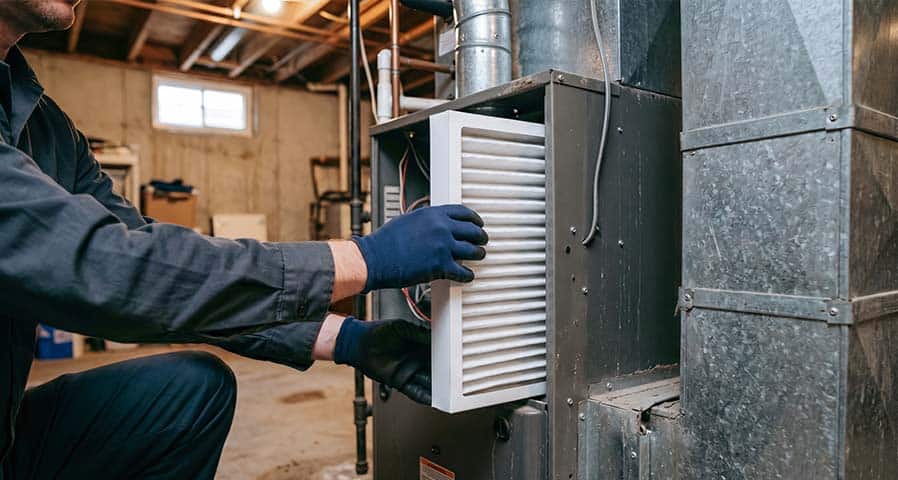
Commercial properties need functioning heating equipment before the first sustained cold spell. Pre-winter HVAC maintenance combines furnace safety checks, airflow testing, control adjustments, and freeze protection to catch problems early, so managers still have time to arrange repairs.
For facility managers, the priority is clear: verify equipment performance, assign corrective work, and document readiness before heating demand peaks.
Key Takeaways
- Schedule heating inspections in early autumn and confirm repair-part availability.
- Measure combustion, airflow, and electrical performance against manufacturer specifications.
- Assign routine checks to trained facility staff and specialized testing to qualified contractors.
- Include idle equipment and water-based systems in freeze-protection planning.
- Stagger electric heating startup where simultaneous operation increases billed demand.
When Should Commercial Properties Schedule Winter HVAC Maintenance?
Schedule inspections before sustained heating demand, leaving time for repairs and replacement parts.
September through early November is a practical window in many regions, although colder locations need earlier preparation. Prioritize equipment with recurring alarms, a history of heating failures, or responsibility for critical spaces.
Allow a provisional 2- to 6-week procurement buffer for motors, gas valves, and actuator assemblies. Confirm supplier lead times rather than treating this planning allowance as guaranteed availability.
Give the contractor service histories and tenant complaints before the visit so the commercial heating system inspection addresses known concerns.
What Should a Commercial Pre-Winter HVAC Maintenance Checklist Include?
A commercial HVAC maintenance checklist needs measurable checks, equipment-specific procedures, and documented corrective actions.
| Inspection area | Action or benchmark |
| Filters and airflow | Inspect filters monthly as a starting point; compare pressure drop and system static pressure with manufacturer limits. |
| Furnace performance | Measure supply-air minus return-air temperature and compare the rise with the unit’s rated range. |
| Motors and electrical components | Compare operating amperage with nameplate ratings and manufacturer limits. |
| Freeze protection | Water freezes at 32°F/0°C; test protective controls before freezing conditions develop. |
| Hydronic loops | Verify glycol concentration provides protection for the site’s lowest expected temperature. |
| Controls | Test occupied, unoccupied, warm-up, heating-stage, and alarm sequences. |
ANSI/ASHRAE/ACCA Standard 180 provides a recognized framework for commercial HVAC inspection and maintenance. Apply manufacturer instructions and locally adopted mechanical and fuel-gas codes. Follow OSHA hazardous-energy control requirements during applicable servicing.
System-Specific Note
Refrigerant, compressor, and defrost checks apply to heat pumps and refrigeration equipment. Standalone gas furnaces require combustion and heating-system checks instead.
What Does Commercial Furnace Maintenance Cover?
Commercial furnace maintenance addresses three areas that directly affect safe, reliable heating.
Safety & Combustion
Inspect burners and heat-exchanger integrity, verify gas pressure, and measure combustion gases with a calibrated analyzer. Check draft where the venting design requires it. A blue flame alone does not establish safe combustion.
Mechanical & Electrical
Test ignition, flame sensors, heating stages, and safety shutdowns through a complete operating cycle. Inspect blower belts and serviceable bearings, and measure motor current.
Venting & Condensate
Inspect flue connections, clearances, combustion-air openings, and outdoor terminations. On condensing equipment, check traps and drains for blockage, leakage, and freeze exposure.
Who Handles Routine Checks and Specialized Testing?
Assign work according to training, authorization, equipment instructions, and local licensing requirements.
Facility Manager / In-House Maintenance Staff
- Review approved BAS schedules and record alarms.
- Visually inspect accessible grilles, returns, and outdoor intakes.
- Replace filters and clear accessible drain-pan debris when trained and authorized.
- Coordinate service access and repair approvals.
Licensed Commercial Mechanical Contractor
- Perform combustion analysis, gas-pressure testing, and applicable draft measurements.
- Inspect heat exchangers using manufacturer-approved methods.
- Diagnose ignition, refrigerant circuits, defrost operation, and freeze controls.
- Assign electrical diagnostics to appropriately qualified personnel.
Which Winter Operating Risks Are Easy to Miss?
Idle equipment still needs protection. Test glycol concentration in closed hydronic loops and verify circulation and low-temperature controls on water-source systems. Drain cooling-tower sumps and exposed piping only when required by the equipment’s seasonal shutdown procedure.
Ask the fire-protection contractor to assess sprinkler piping near outdoor-air louvers. Dry-pipe and preaction systems can retain condensate that freezes; under applicable NFPA maintenance requirements, auxiliary drains and heated valve areas need attention.
Review morning warm-up, too. Starting all-electric heating at 6:00 AM can increase peak demand in a metered facility. Stagger BAS recovery sequences where the utility tariff charges for demand, while maintaining comfort and ventilation.
Frequently Asked Questions
Should vacant commercial spaces remain heated?
Maintain temperatures that protect plumbing and equipment while satisfying lease, insurer, and local requirements.
What belongs in an HVAC emergency plan?
Include contractor contacts, access instructions, tenant notifications, restoration priorities, and approved temporary-heating arrangements.
When should managers consider replacement?
Request repair-versus-replacement options when failures recur, parts become unavailable, or equipment cannot reliably serve the building.
Turn Inspection Findings into Completed Repairs
Schedule a qualified commercial HVAC inspection, request documented readings, and set deadlines for corrective work. Confirm parts availability and close out unresolved issues before winter limits repair flexibility.
Click here to read the full articles, originally published by Air Logix and Aireserv.
Customer Reviews
No reviews yet. Be the first to leave a reply.