
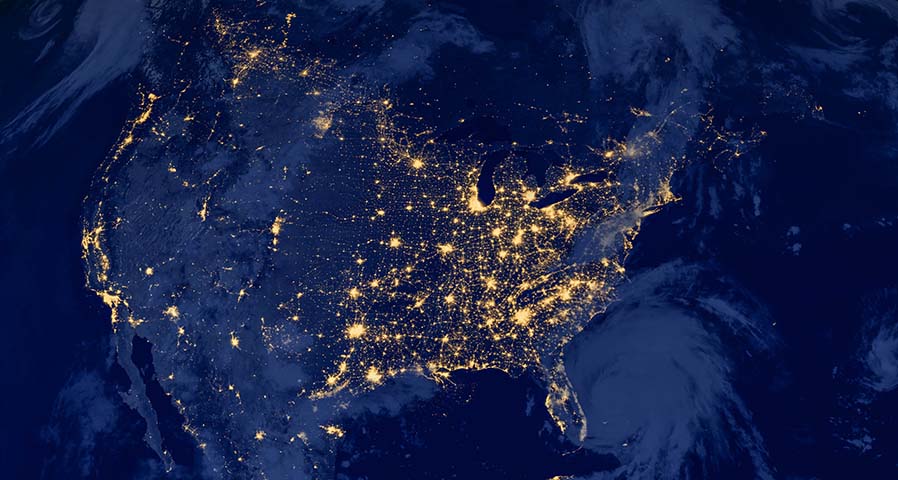
Commercial LED lighting rebates continue to be one of the fastest ways for businesses to reduce the cost of energy-efficient lighting upgrades. Utility companies, state energy programs, and regional organizations collectively offer hundreds of rebate programs that help offset project costs for LED retrofits, lighting controls, high bays, parking lot lighting, and other commercial lighting improvements.
Every state has different utility providers, incentive structures, eligibility requirements, and application processes. Some states offer dozens of active commercial rebate programs, while others have only a limited number. Understanding these differences helps businesses identify available incentives, meet program requirements, and maximize project savings.
This guide explains how commercial LED lighting rebates work, which states currently offer the strongest opportunities, what projects qualify, and where to find the appropriate utility rebate program for your facility.
Key Takeaways
- Commercial LED lighting rebates are available in every region of the United States, but program availability varies by utility.
- Utility rebate amounts differ based on fixture type, energy savings, DLC qualification, lighting controls, and project size.
- Most commercial rebate programs require pre-approval before installation.
- LED retrofits, LED-to-LED upgrades, lighting controls, occupancy sensors, and networked lighting controls frequently qualify.
- Businesses served by investor-owned utilities generally have access to the largest incentive programs.
- Professional rebate management can significantly improve approval rates while reducing administrative workload.
What Are Commercial LED Lighting Rebates?
Commercial LED lighting rebates are financial incentives offered by electric utilities, energy efficiency organizations, municipalities, and state agencies to encourage businesses to install energy-efficient lighting.
Rather than paying the full cost of a lighting upgrade, qualifying organizations receive money back after completing an approved project.
Depending on the utility program, rebates may be offered as:
- Prescriptive rebates (fixed amount per fixture)
- Custom incentives based on energy savings
- Instant discounts through participating distributors
- Performance-based incentives
- Bonus incentives for advanced lighting controls
Many projects combine utility incentives with tax deductions and financing programs, substantially reducing project payback periods.
Why Utilities Pay Businesses to Upgrade Lighting
Lighting accounts for a significant portion of commercial electricity consumption.
When businesses install efficient LED systems, utilities benefit through:
- Lower peak electrical demand
- Reduced infrastructure costs
- Deferred power generation investments
- Lower greenhouse gas emissions
- Improved grid reliability
- Achievement of state energy efficiency goals
Utility efficiency funding is a direct capital optimization strategy: demand-side management reduces total grid strain at a lower cost per kilowatt than constructing or expanding regional generation infrastructure.
Commercial LED Lighting Rebates by State
The table below provides a high-level overview of commercial rebate availability across the United States. Percentages represent an approximate share of customers served by utilities with active commercial LED lighting rebate programs and are intended as a planning reference rather than a guarantee of eligibility.
| State | Estimated Coverage of Active Commercial Rebate Programs | Find Available Rebates |
| Alabama | ~70% | Alabama utility rebate database |
| Alaska | ~40% | Alaska commercial energy programs |
| Arizona | ~85% | Arizona utility rebate programs |
| Arkansas | ~75% | Arkansas commercial rebates |
| California | ~98% | California commercial lighting rebates |
| Colorado | ~90% | Colorado utility rebates |
| Connecticut | ~98% | Connecticut commercial rebates |
| Delaware | ~95% | Delaware business rebates |
| Florida | ~80% | Florida commercial utility rebates |
| Georgia | ~75% | Georgia business rebate programs |
| Hawaii | ~95% | Hawaii Energy commercial rebates |
| Idaho | ~80% | Idaho utility rebates |
| Illinois | ~98% | Illinois commercial lighting incentives |
| Indiana | ~90% | Indiana utility rebates |
| Iowa | ~95% | Iowa commercial rebates |
| Kansas | ~75% | Kansas utility incentives |
| Kentucky | ~70% | Kentucky commercial rebates |
| Louisiana | ~65% | Louisiana utility rebates |
| Maine | ~98% | Efficiency Maine business rebates |
| Maryland | ~98% | Maryland commercial rebates |
| Massachusetts | ~99% | Mass Save business rebates |
| Michigan | ~95% | Michigan utility rebates |
| Minnesota | ~98% | Minnesota commercial rebates |
| Mississippi | ~60% | Mississippi utility incentives |
| Missouri | ~85% | Missouri business rebates |
| Montana | ~70% | Montana utility rebates |
| Nebraska | ~70% | Nebraska commercial programs |
| Nevada | ~90% | Nevada Energy rebates |
| New Hampshire | ~98% | NHSaves business rebates |
| New Jersey | ~98% | New Jersey utility rebates |
| New Mexico | ~75% | New Mexico commercial incentives |
| New York | ~99% | New York utility rebates |
| North Carolina | ~90% | North Carolina utility rebates |
| North Dakota | ~60% | North Dakota commercial rebates |
| Ohio | ~95% | Ohio utility rebate programs |
| Oklahoma | ~70% | Oklahoma commercial rebates |
| Oregon | ~98% | Energy Trust of Oregon |
| Pennsylvania | ~99% | Pennsylvania utility rebates |
| Rhode Island | ~98% | Rhode Island commercial rebates |
| South Carolina | ~80% | South Carolina utility rebates |
| South Dakota | ~60% | South Dakota commercial incentives |
| Tennessee | ~85% | Tennessee Valley Authority programs |
| Texas | ~90% | Texas utility rebate programs |
| Utah | ~85% | Utah commercial rebates |
| Vermont | ~99% | Efficiency Vermont rebates |
| Virginia | ~90% | Virginia utility rebates |
| Washington | ~98% | Washington utility incentives |
| West Virginia | ~70% | West Virginia commercial rebates |
| Wisconsin | ~99% | Focus on Energy |
| Wyoming | ~55% | Wyoming utility rebates |
Note: Individual eligibility depends on your electric utility, not simply your state. Two businesses located in the same city may qualify for different incentives if they receive electricity from different providers.
Which States Offer the Best Commercial LED Lighting Rebates?
The strongest commercial lighting rebate markets are driven by stable, state-mandated energy efficiency funding. These states frequently rank among the strongest markets for commercial lighting rebates:
- California
- Massachusetts
- New York
- Pennsylvania
- Illinois
- Minnesota
- Wisconsin
- Oregon
- New Jersey
- Connecticut
These markets often feature:
- Higher rebate amounts
- More participating utilities
- Incentives for advanced lighting controls
- Custom engineering incentives
- Larger rebates for comprehensive retrofit projects
Which Commercial LED Retrofit and Lighting Control Projects Qualify for Rebates?
Most utility rebate programs support a wide variety of commercial lighting improvements.
Common qualifying projects include:
| Lighting Upgrade | Frequently Eligible |
| LED Troffers | ✓ |
| LED High Bays | ✓ |
| LED Low Bays | ✓ |
| Parking Lot Lighting | ✓ |
| Wall Packs | ✓ |
| Area Lighting | ✓ |
| LED Tubes | ✓ |
| Exit Signs | ✓ |
| Canopy Lighting | ✓ |
| Warehouse Lighting | ✓ |
| Occupancy Sensors | ✓ |
| Daylight Harvesting Controls | ✓ |
| Networked Lighting Controls | ✓ |
| Exterior Site Lighting | ✓ |
| LED-to-LED Upgrades | Often |
| Sports Lighting | Utility dependent |
How Utility Rebate Programs Differ by State
Commercial utility programs vary across ten core operational features:
| Program Feature | May Vary By Utility |
| Rebate amount | ✓ |
| DLC requirements | ✓ |
| Eligible fixture types | ✓ |
| Control requirements | ✓ |
| Minimum energy savings | ✓ |
| Required inspections | ✓ |
| Pre-approval requirements | ✓ |
| Annual funding availability | ✓ |
| Project size limits | ✓ |
| Custom incentive options | ✓ |
Because utility rules change frequently, businesses should always verify program requirements before purchasing equipment.
How to Find Utility LED Rebates for Your Facility
Finding the correct rebate starts with identifying your electric utility provider rather than searching by state alone.
A typical rebate process includes:
- Identify your electric utility provider.
- Locate the utility’s commercial energy-efficiency rebate program.
- Review eligible project types, incentive amounts, and application requirements.
- Confirm the selected lighting products appear on the utility’s approved product list and meet all efficiency requirements.
- Submit the rebate application and obtain pre-approval if required.
- Complete the lighting installation according to program guidelines.
- Schedule any required inspections or verification visits.
- Submit final invoices and supporting documentation to receive the rebate payment.
Large projects often require energy calculations, fixture schedules, lighting layouts, and inspection documentation.
Common Reasons Applications Are Delayed
Common issues include:
- Purchasing equipment before receiving approval
- Installing non-qualified products
- Selecting products that do not appear on the utility’s qualified product list
- Incorrect fixture counts
- Incomplete invoices
- Missing specification sheets
- Late application submission
- Incorrect utility account information
Proper documentation throughout the project can significantly improve approval timelines.
Choose the Right LED Upgrade Strategy to Maximize Rebates
Not all LED lighting projects are the same. Whether you’re considering an LED retrofit, a complete LED upgrade, or replacing first-generation LED fixtures with newer technology, each approach offers different benefits, costs, and rebate opportunities. As utility programs continue to evolve, selecting the right upgrade strategy can have a significant impact on both project savings and incentive eligibility.
Our guide explains the differences between LED retrofits, LED upgrades, and LED-to-LED upgrades, including when each option makes the most sense and how today’s utility programs are increasingly rewarding high-efficiency lighting systems and advanced controls.
Should You Handle Rebate Applications Yourself?
Smaller lighting upgrades may be straightforward enough to manage internally.
However, larger commercial projects often involve:
- Multiple utility providers
- Several facility locations
- Custom engineering reviews
- Lighting calculations
- Product qualification verification
- Incentive forecasting
- Inspection coordination
- Extensive documentation
Professional rebate management helps businesses maximize available incentives while reducing administrative workload and minimizing the risk of missed deadlines or rejected applications.
Best Practices for Maximizing Commercial Lighting Rebates
Organizations that consistently receive the highest incentive amounts typically follow these best practices:
| Before the Project | During the Project | After Installation |
| Confirm utility eligibility. | Install products listed on the utility’s approved equipment list. | Submit documentation promptly |
| Confirm funding availability | Track fixture quantities | Complete inspections |
| Obtain pre-approval | Save specification sheets | Monitor rebate status |
| Review available lighting control incentives. | Photograph installations | Archive project records |
Planning rebate requirements before equipment is ordered often results in larger incentives and faster processing.
Frequently Asked Questions
Do commercial LED lighting rebates expire?
Yes. Most utility rebate programs have annual budgets and funding cycles. Incentive amounts, eligibility requirements, and application deadlines can change throughout the year. Businesses should confirm program availability before purchasing equipment or beginning installation.
Can businesses combine utility LED rebates with tax incentives?
Often, yes. Many organizations can combine utility incentives with federal, state, or local tax benefits, such as energy-efficiency deductions, provided the program rules allow stacking. Combining incentives can significantly reduce the total project cost.
Are pre-approval and inspections required for commercial lighting rebates?
Many utility programs require applications to be approved before equipment is purchased or installed. Some projects also require pre- or post-installation inspections to verify that the upgrade meets program requirements.
Can multi-location businesses apply for rebates across multiple states?
Yes. Companies with facilities in multiple states can often apply for rebates through each local utility serving their locations. Because every utility has different rules and incentive amounts, each project is typically reviewed separately.
Why should businesses use a rebate management company?
Rebate management specialists help identify available incentives, prepare applications, track documentation, coordinate with utilities, and monitor deadlines. This reduces administrative work while helping businesses maximize available funding and avoid missed rebate opportunities.
Conclusion
Commercial LED lighting rebates remain one of the most effective ways to reduce the upfront cost of energy-efficient lighting projects. While rebate availability and incentive amounts vary by utility, businesses in nearly every state have opportunities to lower project costs through utility-sponsored programs. Understanding your utility’s requirements, selecting qualified equipment, and completing the application process correctly can make a significant difference in the total incentive received.
If your organization is planning a commercial lighting upgrade, Incentive Rebate360 can help identify available utility LED rebates, manage the application process, coordinate documentation, and maximize the incentives available for your project. To speak with one of our incentive and rebate specialists, call 480-653-8180, email [email protected], or schedule a call that fits your needs by clicking the button below.
Customer Reviews
No reviews yet. Be the first to leave a reply.