
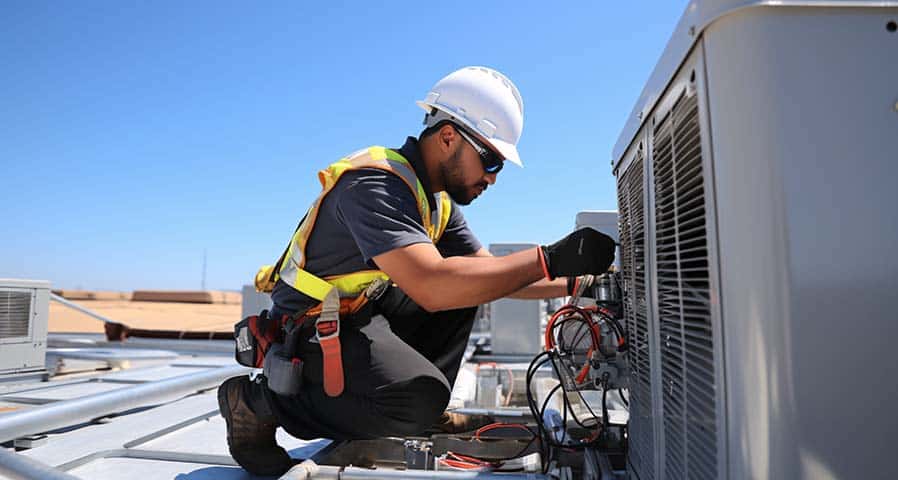
If your business is planning to replace aging HVAC equipment, 2026 may be a favorable time to move the project forward. Commercial HVAC rebates are increasing in many utility territories, creating new opportunities to offset the cost of heat pumps, rooftop equipment, controls, and other energy-efficient upgrades.
An analysis of utility program changes from March 2025 to March 2026 found average state-level increases of 11.5% for prescriptive HVAC rebates and 9.5% for instant rebates. Those figures do not mean that every program increased; they show why businesses should investigate available incentives before purchasing equipment or finalizing a project budget.
Key Takeaways
The value of an HVAC rebate depends on more than the advertised amount. Businesses must align the project with the appropriate utility program and meet each requirement at the correct stage.
What should businesses know about commercial HVAC rebates in 2026?
- Many utilities are offering stronger incentives for efficient HVAC equipment, heat pumps, electrification projects, and controls.
- Rebate opportunities may be calculated per unit, per ton of capacity, by energy savings, or as a percentage of project cost.
- Preapproval is often required before equipment is purchased or installed.
- Efficiency ratings, existing equipment, building type, and utility territory can all affect eligibility.
- Professional rebate management can help businesses identify funding, protect eligibility, and track applications through payment.
Are Commercial HVAC Rebates Increasing in 2026?
Yes, commercial HVAC rebates are increasing across many states and utility programs in 2026. The largest opportunities are not limited to one type of project. Incentives may support heat pumps, air-conditioning systems, variable refrigerant flow equipment, advanced rooftop controls, efficient motors, and other measures that reduce building energy use.
Prescriptive rebates generally provide a published incentive for qualifying equipment, while instant or midstream rebates are commonly delivered through participating distributors or contractors. Custom programs may calculate funding from a project’s estimated energy savings. The best option depends on the equipment, project scope, and local utility rules.
Why Are Utilities Offering More HVAC Incentives?
Utilities offer commercial HVAC rebates to encourage businesses to install equipment that reduces energy consumption and supports local efficiency goals. Higher incentives can make efficient systems more financially practical, especially when a business is already preparing to replace aging or unreliable equipment.
Some programs also support electrification. Con Edison, for example, has highlighted incentives of $120 per MMBtu for full electrification and $70 per MMBtu for partial electrification. MMBtu means one million British thermal units and is a measure of energy use. Programs that use this structure connect the incentive to the amount of heating energy a project is expected to replace.
Maximize HVAC Incentives by Starting the Rebate Conversation Early
Commercial HVAC and heat pump incentives can significantly reduce upfront project costs, but maximizing available savings requires planning. Bringing rebate and incentive experts into the conversation early, before equipment is purchased or installed, can help identify available programs, uncover additional savings opportunities, and ensure important pre-approval and documentation requirements are addressed before project decisions are finalized.
See how our commercial rebate management process helps simplify incentive recovery from initial opportunity identification through final payment, then connect with our commercial rebate experts to discuss available opportunities for your upcoming HVAC and heat pump projects.
What Types of HVAC Projects May Qualify for Rebates?
Commercial HVAC rebates may support heat pumps, air-conditioning equipment, rooftop controls, and comprehensive system retrofits. Heat pumps are receiving particular attention in 2026 as utilities encourage businesses to replace less-efficient heating and cooling equipment or transition from electric resistance, natural gas, oil, and propane systems.
Eligible heat pump projects may include ducted and ductless air-source heat pumps, mini-split systems, packaged heat pumps, and variable refrigerant flow (VRF) systems. VRF heat pumps adjust refrigerant flow based on the needs of individual building zones, which can improve comfort and reduce unnecessary energy consumption. Eligibility typically depends on the equipment’s capacity, efficiency rating, existing system, and installation requirements.
Businesses may also find rebates for qualifying air-conditioning systems, advanced rooftop controls, variable-frequency drives, efficient motors, and other improvements that reduce HVAC energy use. Incentives may be calculated per unit, per ton of capacity, as a percentage of project cost, or according to estimated energy savings.
The examples below show how commercial HVAC and heat pump rebate opportunities vary among utility programs. Because incentive amounts, technical requirements, and funding availability can change, businesses should verify current program terms before purchasing equipment or beginning installation.
| Program | Eligible HVAC Upgrade | Example Incentive |
| Puget Sound Energy | Ductless heat pump replacing electric resistance heating | $1,000 per ton of heating capacity |
| Puget Sound Energy and Partner Utilities | ARC-Single Phase controls for rooftop units under 5 tons | $500 per unit |
| Puget Sound Energy and Partner Utilities | ARC-Lite controls for rooftop units from 5 to under 10 tons | $800 per unit |
| Puget Sound Energy and Partner Utilities | ARC-Lite controls for rooftop units from 10 to 20 tons | $1,000 per unit |
| Puget Sound Energy and Partner Utilities | ARC-Full controls for rooftop units from 5 to under 10 tons | $1,500 per unit |
| Puget Sound Energy and Partner Utilities | ARC-Full controls for rooftop units from 10 to 20 tons | $2,500 per unit |
| Puget Sound Energy and Partner Utilities | ARC-Full controls for rooftop units over 20 tons | $4,500 per unit |
| DC Sustainable Energy Utility | ENERGY STAR-certified ductless or ducted commercial heat pump under 65,000 Btu/hr | $375 per unit |
| DC Sustainable Energy Utility | ENERGY STAR Most Efficient ductless or ducted commercial heat pump under 65,000 Btu/hr | $700 per unit |
| Pepco Maryland | Qualifying air-conditioning equipment | $263 per ton |
| Pepco Maryland | Qualifying air-source heat pump | $300 per ton |
| Pepco Maryland | Qualifying VRF air-source heat pump | $300 per ton |
| SHELD NextZero | Eligible commercial prescriptive HVAC retrofit | Up to 50% of installed cost, subject to a $25,000 annual business cap |
How Can HVAC Rebates Reduce Project Costs?
A rebate reduces the net amount a business must absorb for an eligible energy project. For example, a per-ton heat pump incentive can scale with system capacity, while a controls rebate may provide a set amount for each qualifying rooftop unit. Some programs cap the award at a percentage of the installed cost, preventing the incentive from exceeding the customer’s eligible investment.
Rebates can improve project economics, but businesses should not subtract an estimated incentive from the budget until eligibility has been confirmed. Equipment specifications, baseline conditions, funding availability, and application timing can change the final amount.
Why Should Rebate Planning Begin Before an HVAC Upgrade?
Rebate planning should begin while the project is still being scoped. Many programs require preapproval before equipment is ordered, purchased, or installed. Missing that step can make an otherwise qualifying upgrade ineligible.
The application may require utility account information, technical data sheets, equipment model numbers, contractor proposals, invoices, photographs, a W-9, or a post-installation inspection. SHELD’s NextZero program, for example, requires preapproval and supporting documents before installation. DCSEU also directs commercial applicants to seek preapproval before purchasing equipment.
How Does Rebate Management Support an HVAC Project?
Rebate management connects the technical project plan with the administrative requirements of the utility program. A rebate management provider can identify available incentives, confirm whether the proposed equipment meets program rules, coordinate preapproval, organize documentation, submit the application, and track the incentive through payment.
This support becomes especially valuable for multi-site businesses. Each location may operate in a different utility territory with different measures, deadlines, forms, and incentive caps. Centralized rebate management provides project teams with a single process for evaluating opportunities and reduces the risk of leaving eligible funding unclaimed.
Frequently Asked Questions
Can a Commercial HVAC Project Receive Both Utility Rebates and Tax Incentives?
Yes, a commercial HVAC project may qualify for both utility rebates and tax incentives, but receiving one incentive can affect the costs or benefits used to calculate another. Utility programs, federal tax provisions, state incentives, and financing options follow separate rules. Ask a tax professional and the utility program administrator to review the stacking requirements before finalizing financial projections.
Do Commercial HVAC Rebates Apply to New Construction?
Yes, some commercial HVAC rebate programs include new construction, although others focus on retrofits, replacements, or early retirement of existing equipment. Confirm the applicable project category because incentive rates and efficiency requirements may differ.
Can a Business Apply for an HVAC Rebate After Installation?
A business can apply only after installation, when the program allows it and all deadlines are met. Many commercial programs require preapproval, so waiting until the work is complete may eliminate the opportunity.
Are Custom HVAC Incentives Available for Complex Projects?
Yes, custom incentives may be available when a project does not fit a standard prescriptive measure. These applications usually require an engineered energy-savings calculation and early coordination with the program administrator.
Use Rebate Management to Capture Available HVAC Funding
Rising commercial HVAC rebates give businesses more ways to offset the cost of equipment upgrades in 2026. The opportunity may involve a heat pump, rooftop controls, VRF equipment, or a broader HVAC retrofit. What matters is identifying the correct program and protecting eligibility before the project advances too far.
Incentive Rebate360 provides turnkey rebate management services for commercial energy projects. Our specialists help identify available funding, verify project eligibility, manage documentation, submit applications, and track incentive payments. To discuss an upcoming HVAC or heat pump upgrade, call 480-653-8180, contact our team, or schedule a call at a time that works for you.
Customer Reviews
No reviews yet. Be the first to leave a reply.